
How do PR teams stand out as newsrooms shrink? What's really killing agility? Is AI an advantage for PR - or a threat?
These are just some of the burning questions we sought to answer in our recent webinar, 2026 PR Uncovered: The Trends, Technology, and Challenges Ahead. Industry experts Nicole Metro (Senior Vice President, V2 Communications) and Christian Potts (Director of PR, UiPath) joined Maria Bersteneva (Senior Director, Product Marketing, Cision & Brandwatch), to discuss key themes that emerged from Cision's Inside PR 2026 Report, share how comms teams are navigating today’s pressures, and reveal how top teams are adapting and preparing for what’s next.
You can always watch the session on demand, but if you’re short on time, we’ve highlighted the main talking points below.
1. Same challenges but with a twist
Our survey found that for 60% of PR and comms pros, the changing media landscape is their biggest challenge right now, followed closely by 58% citing resource pressures and expectations to do more with less. These findings came as no surprise to Potts, who pointed out, “This has been the lived-in experience I think most of us have had for the last decade or so.”
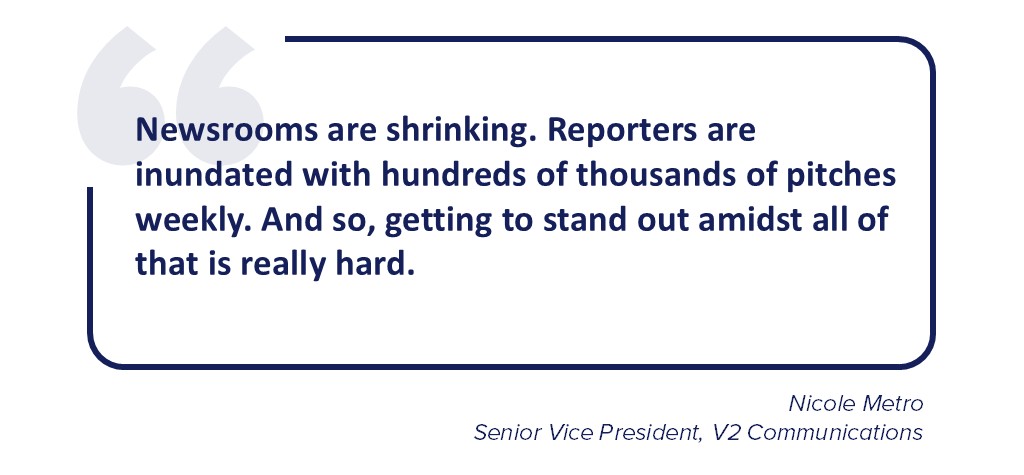
So, what’s different now? Metro pointed to shrinking newsrooms. “I hear from reporter friends often that they are inundated with hundreds of thousands of pitches weekly,” she said. ”Getting to stand out amidst all of that is really hard.” Add to that emerging technologies and the need to engage audiences on several channels (a single press release won’t cut it anymore, Metro said) in order to build your brand’s narrative, and PR teams have their work cut out for them.
How can teams break through? The panelists had this advice: Focus on adapting and developing agility rather than trying to change the landscape itself. It's also crucial to combine traditional, earned strategies with more paid and owned channels. These tactics can help you better navigate the unpredictability of the current media landscape.
Key takeaway: PR and comms teams face the dual challenge of navigating a rapidly fragmenting media landscape while being asked to do more with less. These challenges have persisted for years, but are now intensified by technological change and shrinking newsrooms, requiring teams to become more agile and diversify beyond traditional earned media strategies.
2. The (real) agility problem
According to the report, 1 in 3 PR pros feel their teams are only moderately agile – or not agile at all. When talking about barriers to agility, we found that 63% of respondents cited team size and 53% said slow executive decision-making.
As a solution, Metro advocates for calculated risk-taking: “You have to sometimes act first and then ask for forgiveness later," she said. But she added this caveat: "The only time I'm going to do that is when I know for sure that I've got the messaging down, that I've really understood that this is a topic that the spokesperson can speak to, and I understand their perspective.”
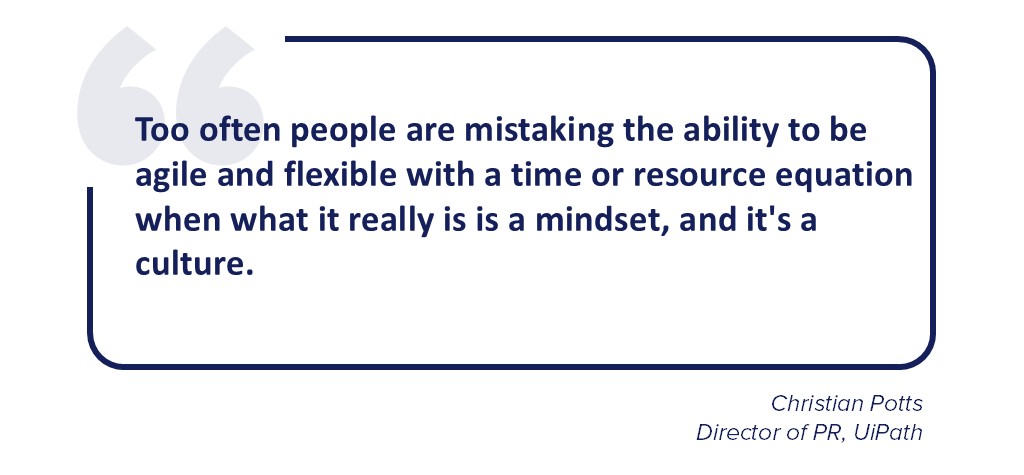
But Potts reframed the agility problem. To him, too often, people mistake the ability to be agile and flexible with a time or resource equation. In reality, agility is a mindset and a culture, he said, requiring organizational buy-in from the top down and a fundamental shift, not just more resources or faster turnaround times.
Empowering your team to make decisions is also crucial. That “doesn’t mean that massive decisions that will impact your brand’s reputation should be made on the spot,” Bersteneva explained, “but your team should have the ability to make [at least some] decisions on the spot and not have to run everything through that approval machine.”
Key takeaway: In PR, increasing agility isn’t necessarily about having more time or resources – it's about building a culture that empowers teams to move quickly and make decisions without getting stuck in approval cycles.
3. Top priorities for PR teams this year
In 2026, PR teams are balancing multiple priorities: 73% of PR pros are focusing on brand awareness, followed by driving sales and revenue (55%), and PR measurement and ROI (49%). What’s notable is the focus on creating bottom-line impact, an increasingly growing expectation for PR teams. But perhaps even more notable: Even the priorities that aren’t specifically centered around PR measurement require some level of measurement – both to ensure teams stay focused on those priorities and can prove their progress toward those goals.
What’s key about PR measurement in 2026? Surface-level metrics are no longer sufficient. According to Metro: “[Measurement] is about drawing connections and parallels between the work that you're doing and the outcomes that are generated, not just the volume of coverage: Where was that coverage? Was it in the right outlets that are most important to your business because they reach a certain audience? What percentage of the story did you make up?”
In other words, it’s not just the metrics you gather, but what you do with those metrics that will matter most in 2026.
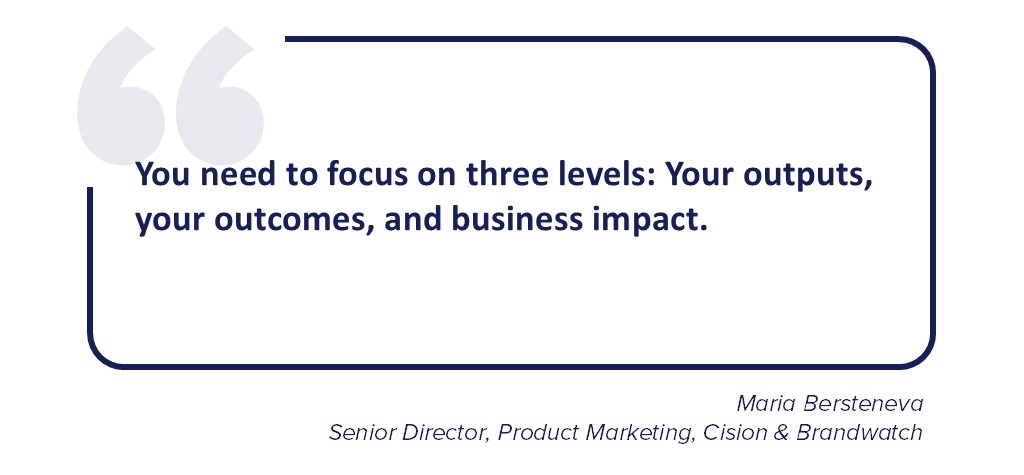
Similarly, you need to focus your measurement strategy – tracking too many metrics at the same time and trying to improve all of them isn’t realistic or sustainable. As a solution, our experts recommended choosing about three to four metrics across three levels to focus on: Outputs (reach), outcomes (web traffic), and business impact (pipeline contribution). This simplified framework can help teams focus their priorities, and the efforts they take to meet those priorities.
Key takeaway: This year, PR teams are increasingly focused on proving business impact. Finding the balance between traditional awareness metrics and tangible ROI can help teams stay the course while demonstrating their role in the broader comms strategy.
4. Making AI a strategic partner
AI adoption in PR has become the standard, with 92% of PR pros using generative AI, with top use cases including brainstorming (73%), writing or refining content (68%), and research (55%). But there’s a difference between using AI, and using it strategically – and that’s what will set PR teams apart in 2026.
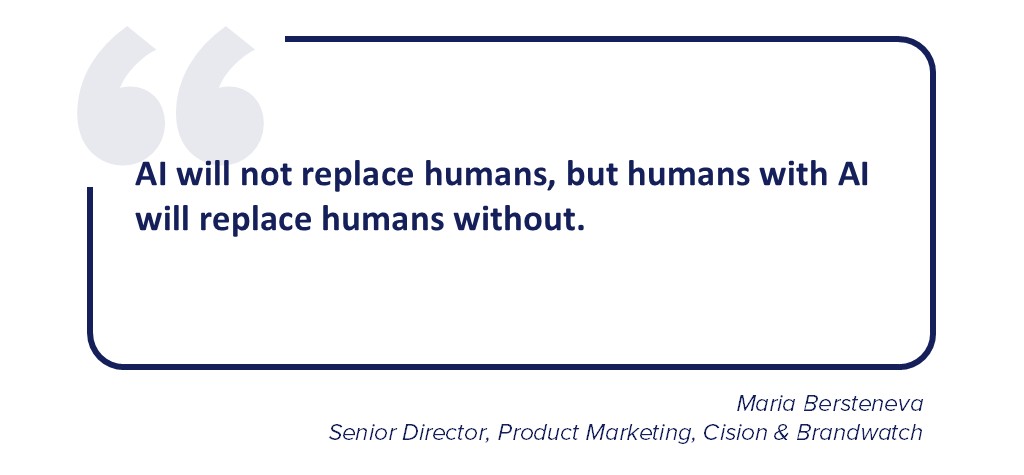
As Bersteneva put it, “AI will not replace humans, but humans with AI will replace humans without.”. The best way to embrace AI, she said, is to think about it not as a tool but as a strategic partner that helps you navigate time and resource constraints, boosting your efficiency.
For all of AI’s benefits, however, Metro stated: “It still does not replace what is the magic of a true PR professional, who can come at a problem and then come up with a creative strategy for [solving that problem]. It doesn't replace our ability to pick up the phone and call a reporter and land a story.” While AI can provide the intel needed to personalize outreach – “summarize some of their recent stories, help us understand what they're most going to be interested in based on that” – it can’t replace the human-to-human connection central to networking, pitching, storytelling, and strategy.
Key takeaway: The real competitive advantage AI affords comes from shifting your mindset – from using AI as just another tool to treating it as a “digital colleague” that can automate manual processes, accelerate the research process, and free up time so you can focus on building meaningful relationships.
Must-have skills to invest in
Even with more expectation to contribute to the bottom line, the mounting pressure to prove ROI, and AI’s increasing presence, the skills that have always been integral to PR remain critical to the job. Our report found that storytelling and content creation (59%) and media relations (44%) topped the list of “most valuable” industry skills 2026.
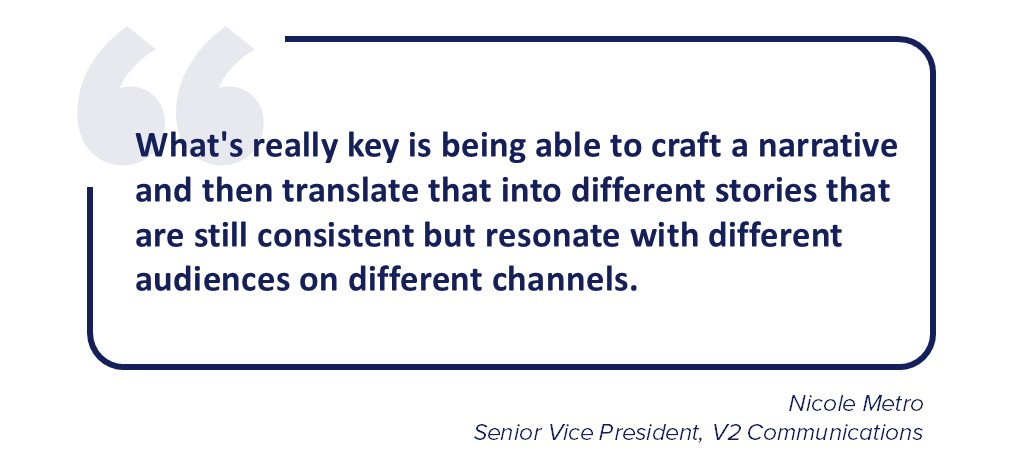
But how you apply those skills will be the real game-changer for PR. And for that, our panelists had plenty of guidance. “What's really key [to strong storytelling and content creation] is being able to craft a narrative and then translate that into different stories that are still consistent but resonate with different audiences on different channels,” Metro explained. “Take a common theme, something that is the true message that you want to deliver, then make sure that that is personalized in such a way that it's going to land no matter where you're telling it.”
It’s also important to frame your brand story as part of a larger conversation that resonates with your audiences, not just company achievements. “Your job as a PR professional is to help them understand that a great story about [your brand] does not necessarily equal a great story. A great story about [your brand] can be a component or an ingredient in a larger overall story that speaks to a customer,” Potts explained. He went on to encourage PR pros to build in time for inspiration – this can include consuming content outside your industry, following creative professionals on networking platforms such as LinkedIn, and exposing yourself to different writing styles to stay fresh and innovative.
Key takeaway: Successful PR teams understand that it’s crucial to develop narratives that translate across channels and audiences, sell strategic vision internally, and make continuous efforts to upskill.
The bottom line
The numbers don’t lie: 2026 is demanding a lot from PR teams – but it also has a lot to offer. With a thoughtful, strategic approach, a willingness to embrace change, and a commitment to investing in the right tools and talent, PR teams won’t merely survive this year – they'll thrive.
Want to hear more from our expert panel? Watch the on-demand session and see what else they had to say about the state of the industry.
Want the full picture? Download the Inside PR 2026 Report and get the insights to drive your team forward this year.
Most Recent Posts
Cision Resources
-
E-books and Guides
Comprehensive how-to guides on strategy and tactics
-
Case Studies
What are other brands doing – and how can we learn from them?

About Bianca Parvu
Bianca is the Junior Copywriter at Cision, specializing in tech industry storytelling. She crafts engaging content across digital channels, from thought leadership to email marketing campaigns.
Learn More. Do More. demo new
PR Tips, Case Studies, and Product Updates


[On-Demand Webinar] The Next Generation of Media Intelligence: From Gorkana to CisionOne
Explore CisionOne, a revolutionary media intelligence platform, and the evolution of Gorkana. Learn key features and strategies from Luke Williams, CisionOne Product Marketing Manager. Elevate your media outreach to new heights!